


Ubuntu Linux is widely deployed on desktops, servers and clouds around the world, and now it’s coming to Intel’s Compute Stick platform as well.
The Intel Compute Stick is a small form factor device, powered by a quad-core Intel Atom processor,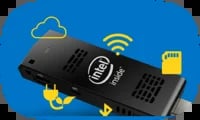 that includes a USB port and a micro-SD card slot. The promise of the Intel Compute Stick is that it can plug into any HDMI TV and turn it into a full computing device.
The Intel Compute stick first launched with Microsoft Windows 8.1, and now it’s getting Ubuntu Linux.
It’s not entirely clear what financial arrangement are in place between Intel and Canonical, the lead commercial sponsor behind Ubuntu, that led to Ubuntu landing on the Compute Stick platform.
Mark Murphy, Director of Devices Sales and Global Alliances at Canonical, told ServerWatch that his company doesn’t comment on commercial arrangements with its partners.
The Intel Compute Stick will be using the older Ubuntu 14.04 LTS distribution and not the newer Ubuntu 15.04 release. Ubuntu 15.04 is noteworthy in many respects, including its addition of the Snappy Ubuntu technology, which provides transactional updates and a more optimized minimal system footprint.
Canonical is working with networking vendors to implement Snappy on networking hardware and with General Electric (GE) for inclusion in Internet of Things (IoT) devices, including refrigerators.
Murphy commented that Ubuntu 14.04 LTS is Canonical’s base platform for its OEM partners, as it is supported for 5 years from the release date.
Even though the Intel Compute Stick is x86 based, which is an architecture that Ubuntu has supported since day one, Canonical still had to do some engineering work.
“OEM enablement involves a great deal of engineering collaboration with specific component vendors, ODMs and OEMs – delivering all the major benefits of factory-level quality assurance standards, full support, tight integration with BIOS, component integration and board-level certification,” Murphy said.
Recommended for You
 What’s Coming in Red Hat Enterprise Linux 7.2?
 Docker Not the Only Container Option in 2015

 Ubuntu Advances Juju Linux Magic Charms
Sean Michael Kerner is a senior editor at ServerWatch and InternetNews.com. Follow him on Twitter @TechJournalist.